Stepping into a yoga studio for the first time can be an eye-opening experience, especially when encountering shelves stocked with rectangular foam bricks, woven cotton belts, and dense, oversized cushions. To an untrained observer, these tools might look like crutches designed solely for individuals who lack flexibility or experience. In mainstream fitness culture, where pushing physical boundaries is often glorified, some practitioners mistakenly believe that using supplementary equipment signals weakness or incomplete mastery of a posture.
In authentic yoga practice, nothing could be further from the truth. Yoga props are precision instruments engineered to enhance spatial awareness, optimize anatomical alignment, and make the profound benefits of postures accessible to bodies of every shape, size, and mobility level. Pioneers of modern postural practice introduced props not to simplify movements, but to allow students to experience the true biomechanical and energetic intentions of each asana safely.
Understanding how to integrate foundational tools such as blocks, straps, and bolsters will transform your time on the mat. Rather than masking physical limitations, props serve as customized structural supports that facilitate deeper muscular release, prevent chronic overuse injuries, and cultivate a sustainable, lifelong yoga practice.
The Versatility and Biomechanics of Yoga Blocks
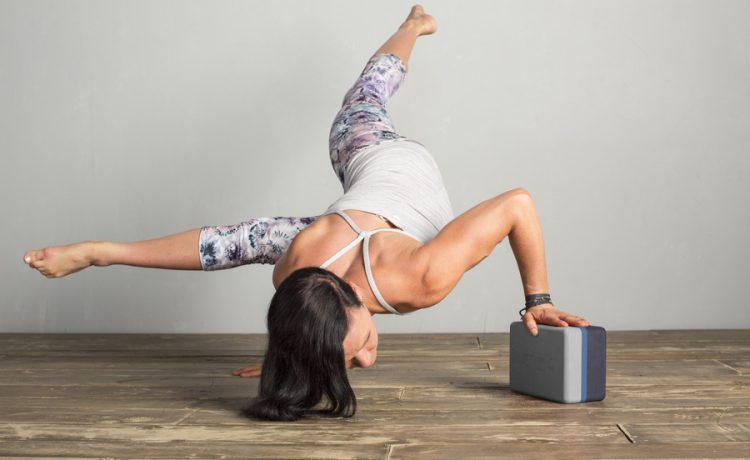
Yoga blocks are among the most recognizable and widely used tools in modern postural practice. Typically manufactured from lightweight foam, dense cork, or solid wood, blocks function essentially as stable, portable extensions of the floor.
Because skeletal proportions vary dramatically across individuals, standard postures do not fit all bodies equally. Variations in torso-to-limb length ratios, hip socket depths, and hamstring elasticity often make reaching the ground difficult without compromising the spine. Placing a block under the hands bridges this physical gap, ensuring that the integrity of the skeletal frame remains intact.
Blocks offer three distinct heights depending on how they are oriented, providing incremental levels of assistance:
-
High Height Setting: Placing the block vertically on its shortest base provides the maximum height of roughly nine inches. This orientation is ideal for deep standing lunges or standing balance postures like half moon pose, allowing the chest to stay open without collapsing weight forward.
-
Medium Height Setting: Tilting the block onto its long, narrow side provides approximately six inches of elevation. This setting works well in forward folds and side-angle postures, giving practitioners reliable grounding while challenging mobility.
-
Low Height Setting: Laying the block flat on its widest surface offers roughly three to four inches of support. It serves as an excellent base for resting the palms during seated stretches or supporting the sacrum during mild, passive backbends.
Beyond bringing the ground closer, blocks are powerful tools for neuromuscular feedback and muscle activation:
-
Adductor Engagement: Squeezing a block between the inner thighs during bridge pose or mountain pose prevents the knees from splaying outward, activating the deep pelvic floor and stabilizing the sacroiliac joints.
-
Shoulder Stability: Holding a block firmly between the palms during downward-facing dog or overhead reaches trains the upper back and serratus anterior to stabilize the shoulder girdle, preventing joint impingement.
-
Spinal Decompression: Placing two blocks under the upper back and head in supported fish pose allows the thoracic spine to gently extend, reversing the rounded-shoulder posture caused by prolonged desk work.
Choosing the right block material depends on your personal needs. Foam blocks are lightweight, soft, and comfortable for restorative postures, while cork and wood blocks offer superior firmness, density, and traction for rigorous standing balance sequences.
Harnessing Yoga Straps for Alignment and Range of Motion
A yoga strap is a long, durable length of non-elastic woven webbing, usually made from natural cotton or synthetic nylon, equipped with a metal or plastic buckle mechanism. A strap acts as an extension of the arms, allowing practitioners to bind, hold, and stabilize their limbs without forcing their joints past a safe range of motion.
When individuals attempt to bind their hands or reach their toes without sufficient mobility, they almost always compensate by rounding the thoracic spine, hunching the shoulders toward the ears, or hyperextending the knees. These unconscious compensations place severe tensile stress on connective tissues and negate the functional benefits of the posture.
Using a strap restores balanced structural mechanics across a variety of applications:
-
Hamstring and Calf Lengthening: In reclining hand-to-big-toe pose, looping a strap around the ball of the foot allows the practitioner to extend the leg upward while keeping the head, shoulders, and lower back relaxed flat on the mat, isolating the hamstring stretch safely.
-
Shoulder Opening and Mobility: Holding a taut strap with wide hands during overhead shoulder pass-throughs increases mobility in the glenohumeral joints without compressing the neck or arching the lumbar spine.
-
Assisted Arm Binds: In seated spinal twists or cow face pose, holding opposite ends of a strap bridges the distance between hands that cannot yet clasp, keeping the collarbones broad and the spine upright.
-
Maintaining Limb Alignment: Looping and cinching the strap around the upper arms in four-limbed staff pose or forearm balance prevents the elbows from flaring out, protecting the delicate rotator cuff muscles.
The buckle on a yoga strap allows you to create adjustable loops of precise lengths. By anchoring limbs in place, straps provide a steady counter-resistance against which muscles can engage isometrically, promoting neuromuscular re-education and healthy flexibility over time.
Deep Rest and Restoration Through Yoga Bolsters
Yoga bolsters are long, dense, cylindrical or rectangular pillows packed tightly with cotton batting, foam cores, or natural buckwheat hulls. While blocks and straps are frequently utilized in active, heat-building practices, bolsters are the defining foundation of restorative, prenatal, and therapeutic yoga.
In fast-paced modern environments, the human nervous system frequently remains locked in a sympathetic, fight-or-flight state. Achieving deep muscular release requires the body to feel completely supported so that protective muscle guarding can disengage. Bolsters provide this firm, anatomical support, signaling to the nervous system that it is safe to downregulate into a restorative parasympathetic state.
Bolsters provide profound therapeutic relief in several specific configurations:
-
Passive Chest and Diaphragm Opening: Laying a rectangular bolster along the length of the spine in supported reclining bound angle pose opens the rib cage, allowing the respiratory diaphragm to expand freely without muscular effort.
-
Pelvic and Hip Release: Placing a bolster horizontally beneath the pelvis in legs-up-the-wall pose elevates the hips slightly above the heart, facilitating gentle venous drainage and calming the cardiovascular system.
-
Lower Back Decompression: Placing a bolster beneath the bent knees during final relaxation pose flattens the lumbar curve against the floor, instantly relieving chronic tension in the psoas and lower back muscles.
-
Seated Hip Elevation: Sitting on the edge of a firm bolster tilts the pelvis anteriorly, allowing the natural lumbar arch to form naturally and preventing hip flexor cramping during seated meditation.
Rectangular bolsters offer a broad, stable surface that is particularly comforting for full-body reclining poses, while cylindrical bolsters provide deeper contouring under joint bends and curves.
Developing a Mindful Approach to Prop Integration
True mastery of yoga is not measured by the absence of props, but by the intelligence and self-awareness with which they are applied. Recognizing when your body requires external support demonstrates deep somatic awareness rather than limitation.
To build an effective personal practice with props, incorporate these practical habits:
-
Prepare Your Props in Advance: Set up two blocks, a strap, and a folded blanket near the top of your mat before starting your practice so they are immediately accessible when needed during transitions.
-
Prioritize Breath Quality Over Depth: If a posture causes your breath to become shallow, strained, or completely held, you have exceeded your functional range; introduce a prop immediately to restore steady respiration.
-
Experiment with Varied Orientations: Adjust the heights of your blocks or the tension on your straps until you find the exact setting that allows your target muscles to engage while keeping your non-working joints relaxed.
-
Release Perfectionist Expectations: Remember that your physical proportions and joint architectures are unique; embrace props as custom tailoring tools that adapt universal movements to your specific anatomy.
By viewing props as empowering instruments of stability and awareness, you unlock a safer, deeper, and profoundly nourishing relationship with your yoga practice.
Frequently Asked Questions
Can using yoga props prevent advanced students from building natural flexibility and strength?
No, using props does not hinder progression; in fact, it accelerates safe development. Props allow advanced students to maintain ideal anatomical alignment while exploring deeper expressions of poses, ensuring that movement occurs at the targeted muscle groups rather than through joint compensations. Props also allow advanced practitioners to hold challenging postures for longer durations, building isometric muscular endurance without premature fatigue.
What is the functional difference between foam, cork, and wooden yoga blocks?
Foam blocks are the lightest and softest option, making them comfortable for restorative support under the back or head, though they can compress slightly under heavy body weight. Cork blocks are denser and heavier, offering excellent grip and firm stability for balancing postures while remaining eco-friendly. Wooden blocks provide unmatched rigidity and durability for standing poses, but their hard, unyielding surface can feel uncomfortable under sensitive bones during passive stretches.
How should a practitioner clean and maintain yoga bolsters and cotton straps?
Most modern yoga bolsters feature removable zippered fabric covers that can be unzipped and washed on a gentle cold cycle, then hung to air-dry to prevent shrinkage. The inner core should not be submerged in water; spot cleaning and regular airing out in sunlight keep the filling fresh. Cotton yoga straps can be placed inside a mesh laundry wash bag and machine-washed with mild detergent, then laid flat to dry to keep the metal buckles from tangling or denting the machine drum.
Is it safe to substitute household items for specialized yoga props when practicing at home?
Yes, household items can serve as practical temporary alternatives. Thick, hardcover books or sturdy tissue boxes can substitute for yoga blocks, a woven bathrobe belt or leather trouser belt can work in place of a yoga strap, and a rolled-up sleeping bag or two firm sleeping pillows wrapped in a heavy blanket can replicate the dense support of a yoga bolster. However, ensure that any homemade substitute provides stable, non-slip footing to avoid sudden slips during balancing poses.
Why are rectangular bolsters generally preferred over round bolsters for beginners?
Rectangular bolsters feature a broad, flat surface that does not roll or shift when body weight is applied, providing immediate stability and predictable support for beginners. Round or cylindrical bolsters have a curved profile that can roll slightly under the spine or hips, requiring greater core stabilization and body awareness that newer students might find distracting during restorative relaxation.
How does elevating the hips on a prop reduce discomfort during seated cross-legged postures?
When sitting directly on a flat floor, individuals with tight hip musculature experience a posterior pelvic tilt, which forces the lower back to round outward and puts excessive strain on the hip flexor tendons. Elevating the pelvis onto a block or bolster raises the hip joints higher than the knees, allowing the pelvis to tilt naturally forward into an optimal neutral alignment that removes pressure from the lower lumbar discs and releases tension across the groin.
What strap length is recommended for general yoga practice?
A standard eight-foot strap is the most versatile length for the vast majority of practitioners, accommodating various heights and body types for both leg stretches and full-body binding loops. Shorter six-foot straps work well for petite individuals or simple arm reaches, while taller individuals over six feet tall generally benefit from a ten-foot strap to comfortably bind around the feet and torso without running out of webbing.