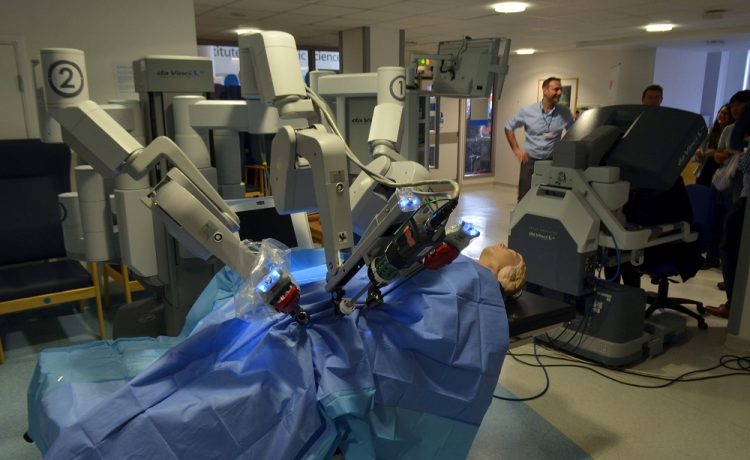
The integration of advanced robotic systems into clinical medicine and operative surgery represents one of the most consequential transformations in modern healthcare. For decades, conventional open surgery required large incisions to give surgeons adequate visual and physical access to internal organs. While effective, these invasive procedures frequently resulted in substantial blood loss, extended hospitalizations, significant post-operative pain, and prolonged physical recovery periods.
Today, medical robotics has redefined the boundaries of clinical precision. By bridging mechanical engineering, high-definition three-dimensional visualization, computing power, and artificial intelligence, robotic platforms serve as high-dexterity extensions of human clinicians. From master-slave surgical consoles inside sterile operating rooms to automated hospital delivery units and wearable rehabilitation exoskeletons, robotics is transforming how diseases are diagnosed, treated, and managed across the entire continuum of patient care.
Architectural Evolution of Surgical Robotics
The modern era of robotic-assisted surgery traces its roots to military and aerospace research aimed at performing tele-surgery on remote battlefields and orbital stations. While early prototypes demonstrated basic mechanical feasibility, contemporary surgical platforms have evolved into sophisticated digital ecosystems that enhance human dexterity rather than replace surgical judgment.
A standard robotic surgery workstation comprises several integrated hardware and software components:
-
The Ergonomic Surgeon Console: The primary surgeon sits comfortably outside the sterile field, viewing high-resolution three-dimensional stereoscopic imagery of the surgical site while manipulating sensitive hand controllers and foot pedals.
-
The Patient-Side Cart: Multi-jointed robotic arms hold articulating instruments and high-magnification endoscopes, translating the surgeon hand maneuvers into precise micro-movements inside the patient anatomy.
-
Tremor-Filtration and Motion-Scaling Algorithms: Proprietary software filters out natural physiological hand tremors and scales down broad hand motions into sub-millimeter surgical maneuvers, preventing accidental tissue trauma.
-
EndoWrist Articulation Technology: Unlike rigid laparoscopic tools that offer limited degrees of freedom, robotic instruments feature multi-directional wrist joints that rotate beyond the range of motion of the human hand, enabling complex suturing and dissection within tight anatomical corridors.
These technical capabilities allow surgical teams to navigate deep anatomical cavities with unmatched spatial orientation, ensuring that delicate nerves, blood vessels, and healthy margins remain intact.
Major Clinical Applications Across Surgical Disciplines
Robotic assistance has established a permanent foothold across diverse surgical subspecialties, rapidly shifting procedures from conventional open techniques toward minimally invasive methodologies.
Urological and Gynecological Procedures
Urology was among the earliest adopters of robotic platforms. Robot-assisted radical prostatectomy has become the standard of care for localized prostate cancer. The enhanced visualization of the pelvic floor allows surgeons to spare microscopic neurovascular bundles responsible for urinary continence and erectile function. Similarly, in gynecology, surgeons utilize robotic platforms for complex hysterectomies, deep infiltrating endometriosis resections, and pelvic organ prolapse repairs.
General and Colorectal Surgery
General surgery represents one of the fastest-growing sectors of medical robotics. Complex gastrointestinal operations, including bariatric revisions, pancreatectomies, and low anterior resections for rectal cancer, benefit from robotic stability. The robotic arms facilitate precise lymph node dissections and delicate microvascular anastomoses in confined abdominal spaces where standard laparoscopic instruments encounter severe mechanical constraints.
Orthopedic Joint Reconstruction
In orthopedic surgery, semi-autonomous robotic arms assist surgeons in performing total and partial knee and hip arthroplasties. Using preoperative computerized tomography scans and intraoperative optical tracking, robotic software generates a customized three-dimensional bone model. The robotic platform then enforces strict haptic boundary zones, guiding the oscillating saw or burr to shave bone surfaces with sub-millimeter accuracy, ensuring optimal implant alignment and balanced ligament tension.
Cardiothoracic and Neurosurgical Interventions
Robotic systems enable cardiac surgeons to perform coronary artery bypass grafting and mitral valve repairs through tiny intercostal port incisions between the ribs, eliminating the need for sternotomies and cardiopulmonary bypass in selected patients. In neurosurgery and spine procedures, robotic guidance platforms assist in placing pedicle screws and navigating deep-seated cranial lesions, dramatically reducing trajectory deviation and radiation exposure from fluoroscopy.
Therapeutic and Institutional Robotics Beyond the Operating Room
While operative platforms capture widespread public attention, robotics plays an equally critical role across non-surgical medical sectors, optimizing hospital workflows and accelerating physical recovery.
-
Rehabilitation and Mobility Exoskeletons: Motorized robotic suits and robotic gait trainers assist stroke survivors, spinal cord injury patients, and trauma victims in regaining motor function by enforcing repetitive, physiologically correct movement patterns through neuroplastic retraining.
-
Automated Pharmacy and Dispensing Systems: Centralized robotic dispensers sort, package, and label pharmaceuticals with near-zero error rates, verifying dosages through optical barcode scanners and reducing dangerous adverse drug events.
-
Autonomous Mobile Service Robots: Hospital corridors increasingly feature autonomous mobile robots that transport sterile linens, laboratory specimens, biohazard waste, and meals, allowing nursing personnel to dedicate more time to direct patient care.
-
Targeted Radiation Therapy Platforms: Robotic arms equipped with linear accelerators continuously track patient breathing and tumor motion in real time, delivering high-dose stereotactic radiosurgery to cancerous lesions while sparing surrounding healthy tissue.
By streamlining institutional logistics and enhancing therapeutic protocols, hospital robotics reduces administrative overhead and mitigates clinical staff burnout.
Artificial Intelligence, Computer Vision, and Next-Generation Frontiers
The convergence of robotics with artificial intelligence and advanced sensing is ushering in a new paradigm of intelligent surgery. Modern systems are transitioning from purely mechanical slaves to active intraoperative co-pilots.
Computer vision algorithms can now analyze real-time video feeds during surgery to identify critical anatomical landmarks, trace blood flow through near-infrared indocyanine green fluorescence, and warn surgeons if an instrument approaches a vulnerable nerve or major artery. Preoperative diagnostic imaging can be superimposed directly onto the operative field using augmented reality overlays, providing the surgeon with subsurface structural awareness.
Furthermore, researchers are advancing flexible micro-robotics and magnetically steerable endovascular catheters capable of traversing the circulatory system to dissolve acute cerebral blood clots. Meanwhile, high-bandwidth communication networks and low-latency data protocols are making long-distance tele-surgery increasingly practical, allowing specialist surgeons to operate on patients located thousands of miles away in rural or underserved clinics.
Economic Challenges and Ethical Considerations
Despite remarkable clinical advantages, the widespread adoption of medical robotics introduces complex institutional and socio-economic hurdles.
Capital acquisition costs for primary surgical consoles can exceed several million dollars, accompanied by recurring expenses for single-use articulating instruments, specialized drape sets, and mandatory maintenance service contracts. For community healthcare centers and developing nations, these financial barriers can exacerbate existing disparities in access to cutting-edge medical treatment.
Additionally, the learning curve required for surgical teams is steep. Operating through a digital console requires extensive simulation training, proctored clinical cases, and a fundamental shift in spatial perception and communication within the operating theater. Healthcare networks must continually weigh the procedural expenses of robotic equipment against the downstream economic savings generated by shorter patient hospital stays and lower complication rates.
Frequently Asked Questions
Are surgical robots capable of operating autonomously without human intervention?
No, clinical surgical platforms do not operate autonomously. Every movement, cut, and suture is directly controlled in real time by a licensed surgeon seated at the primary master console. The robotic arms possess no independent decision-making capabilities and cannot execute motions without direct operator input.
How does robotic-assisted surgery differ fundamentally from conventional laparoscopy?
While both approaches utilize small incisions and camera visualization, conventional laparoscopy uses rigid, straight instruments that provide limited movement and flat two-dimensional monitor displays. Robotic surgery provides true three-dimensional stereoscopic depth perception, instruments with human-like wrist articulation, and electronic tremor filtration that enables far greater dexterity in confined spaces.
What happens if a robotic surgical system experiences a power failure or software glitch mid-procedure?
Robotic platforms are engineered with multi-layered safety redundancies, including uninterruptible battery backup systems, continuous self-diagnostic fault detection, and mechanical fail-safe brakes that instantly lock instrument arms in place. If an unresolvable hardware error occurs, the surgical team can rapidly disengage the robotic cart and convert the procedure to traditional laparoscopy or open surgery.
How do surgeons maintain a sense of touch when operating through a digital console?
Surgeons rely heavily on visual haptics, which is the ability to interpret tissue tension, resistance, and elasticity by closely observing subtle physical deformations and tissue blanching on high-definition three-dimensional displays. In addition, newer generation robotic platforms are beginning to incorporate true sensory haptic feedback mechanisms that transmit physical resistance directly to the console hand controls.
Why does robotic surgery typically result in faster recovery times for patients?
Robotic systems utilize miniature instruments that enter the body through keyhole incisions, minimizing collateral trauma to skin, muscles, and surrounding organs. This reduced mechanical disruption results in significantly less postoperative swelling, reduced inflammatory pain, minimal blood loss, and a drastically lower risk of surgical site infections.
What training and credentialing must a physician complete before performing robotic surgery?
Surgeons must complete rigorous multi-phase certification pathways. This training includes extensive virtual reality simulation drills, dry-lab mechanical practice, tissue model dissection, bedside assistant training, and a mandated series of proctored live operations under the direct supervision of an experienced master robotic surgeon before receiving independent hospital operating privileges.
Can pediatric patients safely undergo robotic surgical procedures?
Yes, pediatric surgeons increasingly utilize specialized mini-robotic platforms and single-port systems to treat complex congenital anomalies in infants and children. The superior magnification and sub-millimeter motion scaling of robotic tools make them well suited for performing delicate reconstructive procedures on pediatric organs and blood vessels.