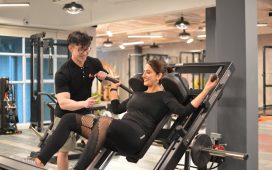
For decades, mainstream fitness culture treated strength training as an activity reserved exclusively for competitive athletes, bodybuilders, or powerlifters. Aerobic exercise, such as running, cycling, or step aerobics, was widely considered the gold standard for general public wellness and longevity. However, contemporary exercise physiology has fundamentally challenged this outdated perspective.
Resistance training is now recognized as a cornerstone of functional human vitality. Far from just building visible muscular size, challenging muscles against external loads stimulates a cascade of physiological adaptations that protect joints, enhance metabolic function, preserve functional mobility, and safeguard physical independence throughout life. Whether the goal is carrying heavy bags of groceries without straining your back, playing actively with children, or maintaining posture during prolonged desk work, strength training directly builds the physical resilience necessary for everyday life.
Counteracting Sarcopenia and Age-Related Muscular Atrophy
Beginning around the third decade of life, the human body naturally starts losing skeletal muscle mass and functional strength, a biological phenomenon known as sarcopenia. Without deliberate resistance exercise, adults can lose between three to eight percent of their total muscle mass per decade after the age of thirty, with this rate accelerating significantly after age sixty.
This gradual loss of functional muscle tissue carries serious consequences:
-
Diminished Basal Metabolic Rate: Skeletal muscle is a metabolically expensive tissue, requiring significant energy just to maintain at rest. Losing muscle lowers the daily caloric burn, making unexplained fat accumulation more likely over time.
-
Loss of Type Two Muscle Fibers: Fast-twitch muscle fibers, which are responsible for rapid force production and dynamic stabilization, atrophy much faster than slow-twitch endurance fibers.
-
Reduced Physical Autonomy: Everyday tasks such as standing up from low chairs, climbing steep staircases, lifting luggage, or maintaining balance on unstable terrain become increasingly difficult and hazardous.
-
Increased Vulnerability to Traumatic Falls: Weaker stabilizing musculature in the hips, ankles, and core impairs the body ability to correct sudden trips, drastically increasing fall risks in older age.
Engaging in regular strength training provides the specific mechanical stimulus required to halt and reverse sarcopenia. Through the process of progressive overload, muscle protein synthesis is stimulated, keeping existing muscle fibers robust while recruiting dormant motor units across the nervous system.
Enhancing Skeletal Density and Connective Tissue Resilience
While muscle tissue receives the majority of visual attention, the skeleton, tendons, and ligaments benefit just as significantly from mechanical loading. Bones are dynamic, living structures that continuously remodel themselves in response to the physical stresses placed upon them, an adaptation described by Wolff Law.
When a muscle contracts against resistance, it pulls directly on the tendon, which in turn exerts a mechanical strain on the bone attachment site. This force signals specialized bone-forming cells to absorb circulating minerals and synthesize new bone matrix:
-
Increased Bone Mineral Density: Heavy and moderate resistance exercises stimulate bone deposition in high-risk fracture zones, including the femoral neck of the hip, the lumbar spine, and the wrists.
-
Protection Against Osteopenia and Osteoporosis: Loading bones regularly prevents the progressive micro-architectural deterioration that leads to porous, brittle skeletons prone to stress fractures.
-
Tendon and Ligament Remodeling: Connective tissues adapt to resistance by increasing collagen synthesis and cross-linking, making tendons thicker, stiffer, and far more resistant to painful tears and tendinopathies.
-
Articular Cartilage Nourishment: Controlled joint movement under load enhances the diffusion of nutrients through synovial fluid into joint cartilage, preserving joint space and mitigating osteoarthritis progression.
By creating a resilient structural frame, strength training acts as internal armor, shielding vulnerable joints and fragile bones from unexpected impacts and sudden mechanical overloads.
Upgrading Metabolic Health and Blood Glucose Regulation
The role of skeletal muscle extends well beyond physical locomotion; muscle tissue functions as the largest metabolic and endocrine organ in the human body. Because skeletal muscle accounts for the vast majority of post-meal glucose disposal, muscular health dictates systemic glycemic control and insulin sensitivity.
Regular resistance exercise creates profound metabolic improvements through several clear pathways:
-
Non-Insulin-Dependent Glucose Uptake: Muscle contractions actively trigger the translocation of glucose transporter type four proteins to cell surfaces. This allows muscle cells to clear excess glucose from the bloodstream rapidly without requiring insulin.
-
Expanded Glycogen Sink: Increasing total lean mass creates a larger storage capacity for stored carbohydrates, preventing excess blood sugars from being converted into circulating triglycerides or visceral fat.
-
Improved Insulin Receptor Sensitivity: Regular mechanical loading upregulates the signaling pathways of insulin receptors within muscle cells, helping prevent or manage metabolic syndrome and type two diabetes.
-
Favorable Alteration of Body Composition: By increasing lean mass while lowering visceral fat levels, strength training creates a favorable hormonal environment that supports healthy blood lipids and cardiovascular metrics.
These metabolic benefits make resistance training an essential non-pharmacological tool for maintaining healthy blood pressure, steady daytime energy, and robust cardiovascular wellness.
Correcting Postural Imbalances and Reducing Everyday Injury Risk
Modern lifestyle habits, such as prolonged sitting in front of computer monitors, commuting in vehicles, and looking down at handheld digital devices, place the human body in compromised static positions for hours each day. Over time, this creates severe postural distortions, including forward head posture, rounded shoulders, anterior pelvic tilt, and chronic lower back strain.
Strength training directly corrects these muscular imbalances by targeting neglected muscle groups:
-
Strengthening the Posterior Chain: Exercises like deadlifts, rows, hip thrusts, and back extensions reinforce the hamstrings, gluteus muscles, spinal erectors, and upper back, counteracting chronic sitting.
-
Building Dynamic Core Stability: Training the deep abdominal wall, obliques, and pelvic floor creates a natural muscular belt that stabilizes the lumbar spine, eliminating unnecessary spinal shear stress during heavy lifting or twisting.
-
Improving Scapular Mechanics: Strengthening the rhomboids, middle trapezius, and serratus anterior restores proper shoulder blade rhythm, preventing rotator cuff impingement and chronic neck tightness.
-
Enhancing Proprioceptive Awareness: Lifting weights teaches the central nervous system spatial awareness and joint positioning, allowing the body to move efficiently and safely during spontaneous physical tasks.
When muscles are balanced and properly conditioned, the body naturally adopts a comfortable, upright alignment that reduces wear and tear on spinal discs and peripheral joints.
Designing an Accessible, Beginner-Friendly Strength Routine
Building functional everyday strength does not demand complex isolation routines or endless hours in a commercial weight room. Highly effective routines revolve around basic human movement patterns performed two to three times per week.
A well-structured foundational program should incorporate movements from these primary movement categories:
-
Squat Patterns: Goblet squats, bodyweight box squats, or leg presses to strengthen the quadriceps, glutes, and knees.
-
Hinge Patterns: Romanian deadlifts, kettlebell deadlifts, or glute bridges to train the hamstrings, lower back, and hips.
-
Upper Body Push Patterns: Push-ups, dumbbell bench presses, or overhead dumbbell presses to develop the chest, front shoulders, and triceps.
-
Upper Body Pull Patterns: Seated cable rows, dumbbell single-arm rows, or assisted pull-ups to strengthen the lats, upper back, and biceps.
-
Loaded Carries and Core Bracing: Farmer carries, suitcase carries, and standard planks to develop functional grip strength and anti-rotational core stability.
Focus on mastering movement mechanics with light to moderate weights before gradually adding resistance. Consistency, technical proficiency, and proper recovery will deliver sustainable physical strength that translates seamlessly into daily life.
Frequently Asked Questions
How does strength training influence resting blood pressure over the long term?
While blood pressure temporarily rises during the active lifting phase of a heavy set, the chronic physiological adaptation to regular resistance training is a noticeable reduction in resting systolic and diastolic blood pressure. Lifting stimulates the release of nitric oxide in blood vessel walls, decreases systemic vascular resistance, and improves the autonomic regulation of the cardiovascular system.
Is it possible to build meaningful strength using only bodyweight exercises without gym equipment?
Yes, bodyweight exercises or calisthenics can build significant muscular strength when applied with progressive overload principles. By manipulating leverage, slowing down movement tempo, increasing total repetitions, or progressing to advanced movement variations like single-leg pistol squats or elevated decline push-ups, you can impose sufficient mechanical tension on muscles to stimulate growth and bone remodeling.
What is the minimum weekly time commitment required to achieve noticeable strength gains?
Engaging in just two focused strength training sessions per week, lasting thirty to forty-five minutes each, is enough to produce measurable increases in muscular strength, bone density, and metabolic rate for beginners and intermediate trainees. The key factor is training close to muscular fatigue with proper intensity across major multi-joint compound movements.
How does regular resistance training support natural hormone balance in men and women?
Strength training promotes the balanced production of anabolic and regulatory hormones, including growth hormone, testosterone, and insulin-like growth factor one, which are essential for cellular repair and tissue recovery. Additionally, it helps regulate cortisol rhythms, preventing chronic stress-induced catabolism and supporting optimal thyroid function and metabolic rate.
Why does grip strength correlate so strongly with overall physical health and longevity?
Grip strength serves as a practical, reliable biomarker for whole-body muscular integrity and central nervous system vitality. Individuals with higher grip strength generally possess greater overall lean muscle mass, superior bone density, and better neuromuscular coordination, making them significantly less prone to chronic illnesses, frailty, and mobility limitations as they age.
How soon after starting a strength program do neuromuscular adaptations occur before muscles physically grow?
During the initial four to eight weeks of a new strength program, the majority of strength improvements stem from neural adaptations rather than actual muscle tissue enlargement. The central nervous system becomes dramatically more efficient at recruiting motor units, firing muscle fibers synchronously, and inhibiting antagonistic muscle resistance, resulting in rapid strength gains before visible muscle hypertrophy appears.
Can strength training improve joint mobility and flexibility as effectively as dedicated stretching?
When resistance exercises are performed through a full, controlled range of motion, strength training increases dynamic flexibility and joint mobility just as effectively as static stretching. Moving weights through complete joint extensions and contractions lengthens muscle fibers under active mechanical tension, strengthening connective tissues at end-range positions where traditional stretching leaves muscles structurally unsupported.